Delta Dreams and Bangladesh’s Coastal Challenges
Dr Shahrina Akhtar [Published: Daily-sun, 05 Jan 2026]
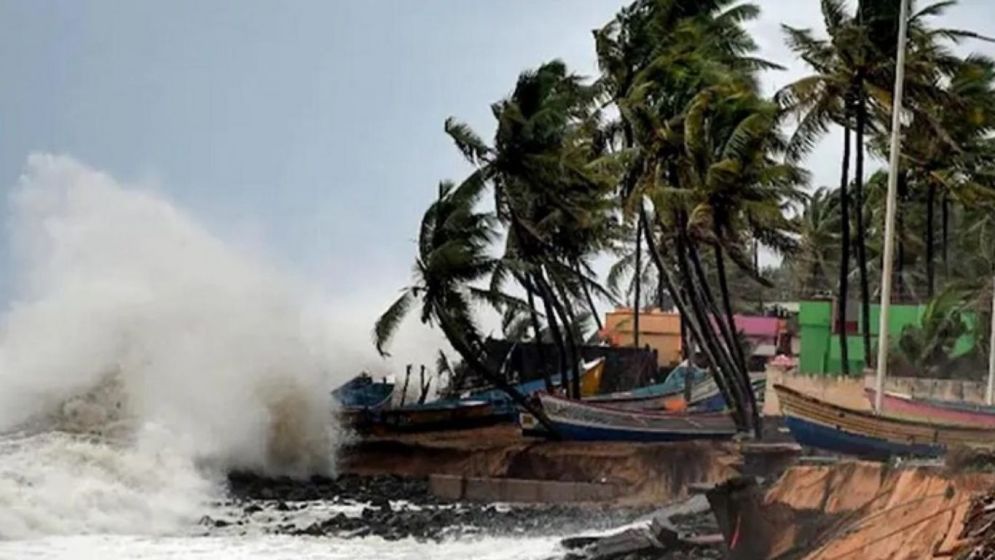
The coastal zone of Bangladesh, home to more than 30 million people and sprawling across tens of thousands of square kilometres of low lying land, is not just another region in a developing country. It is a global climate frontier, where rising sea levels, increasing storm tide hazards, salinity intrusion, and changing rainfall patterns are not future projections but today’s lived experience. The Bangladesh Delta Plan 2100 (BDP 2100) was conceived as a century long strategic framework to manage these intersecting pressures through integrated water, land, and ecosystem governance and sustainable development. Officially approved by the government in September 2018, this is the world’s first comprehensive delta plan that moves beyond short term disaster response to adaptive, long term planning for human environment systems in a delta context.
BDP 2100 defines “hotspots” as planning units where similar hydrological and climate vulnerabilities converge, with Bangladesh’s coastal zone as a primary example facing threats from sea level rise, storm surge, cyclones and salinity intrusion. The plan outlines a vision of a safe, climate resilient and prosperous delta that contributes to national development goals like poverty elimination and upper middle income status while safeguarding water, food, and environmental security.
From Planning to Implementation: The strategic richness of BDP 2100 is undeniable, but vision alone cannot protect families, farmland, or infrastructure. That is where Support to Implementation of Bangladesh Delta Plan 2100 (SIBDP 2100) becomes essential. Hosted by the General Economics Division (GED) of the Planning Commission with technical and financial support from the Governments of Bangladesh and the Netherlands, SIBDP 2100 is the delivery engine for BDP 2100. This project has been designed to strengthen the institutional, financial, organisational, and knowledge capacities needed to translate long term delta strategies into action.
SIBDP 2100 has worked to formalise multi sector coordination through the establishment of a Delta Governance Council and the creation of a Delta Wing to steer implementation. The project has also developed critical knowledge infrastructure such as the Delta Knowledge Portal, Climate Atlas, and a digital library to centralise data and analytical tools for planners and researchers. The integration of these tools into decision making systems helps align investments with evolving climate and socio economic conditions.
International technical partners such as Deltares, Wageningen University & Research, the Institute of Water Modelling (IWM), and the Centre for Environmental and Geographic Information Services (CEGIS) support SIBDP 2100 through the Bangladesh Netherlands Joint Cooperation Programme (JCP). Under this collaboration, capacity building has included specialised training on the Bangladesh Meta model, a rapid, integrated modelling tool developed to support adaptive investment planning and river basin assessments, enabling planners to test alternative scenarios under climate uncertainty.
Learning from Research: A wealth of recent scientific research underlines why adaptive planning and knowledge informed implementation matter. A study on soil salinity in southwest coastal Bangladesh mapped salt gradients in the root zone of soils, revealing significant salinity levels, up to 9.09 mS/cm in places such as Debhata and Koyra, that threaten agriculture and freshwater resources. These data are invaluable for prioritising soil and water management projects under BDP 2100’s coastal investment portfolio.
Another research effort used advanced climate modelling to project heightened storm tides under warming scenarios, suggesting that the historically once in a century coastal surge could become more frequent and intense by 2100. Such findings indicate that current coastal defences may be inadequate without significant adaptation and scaling of protective infrastructure.
Salinity impacts are also affecting aquatic ecosystems, with species like water hyacinth and taro exhibiting physiological stress at elevated salinity, a clear sign that biodiversity and livelihoods dependent on coastal water bodies are under threat.
The Global Context: The global climate agenda articulated at COP30 underscored the critical need to scale adaptation finance. Emerging agreements to triple adaptation finance by 2035 reaffirm that climate vulnerable nations like Bangladesh require predictable, long term support if they are to implement transformative plans like BDP 2100. For Bangladesh’s coastal hotspot, this means enhancing access to funds from sources such as the Green Climate Fund and other climate finance mechanisms. By aligning coastal projects in the BDP 2100 investment pipeline with international adaptation funding criteria, especially those emphasising ecosystem based approaches and community resilience, Bangladesh can unlock new financing that also delivers co benefits for biodiversity, food security, and infrastructure resilience.
Towards Coastal Sustainability and Delta Resilience:
Bangladesh stands at a critical transition point. Through BDP 2100, the country has articulated a world leading approach to deltaic adaptation and long term planning. SIBDP 2100 has laid the practical groundwork for implementation through governance reform, knowledge systems and planning tools. Yet, to ensure sustainability, Bangladesh must continually integrate scientific insights into investment decisions, expand funding partnerships, and strengthen the institutional fabric that binds sectors together.
Despite ambitious strategies and research support, implementation gaps persist, such as financing, institutional fragmentation as well as data continuity and monitoring. However, by placing communities, ecosystems, and data at the heart of delta management, and by leveraging international collaboration and finance, Bangladesh can turn its coastal hotspot from a nexus of climate risk into an exemplar of adaptive resilience and sustainable development. The journey to 2100 is long, but with continued momentum, the delta can remain a place of life, opportunity, and innovation for generations to come.
____________________________________
The writer is a Research Coordinator and Assistant Professor at the United International University (UIU).
She can be reached at shahrina.akhtar@gmail.com