Interpreting the People’s Vote
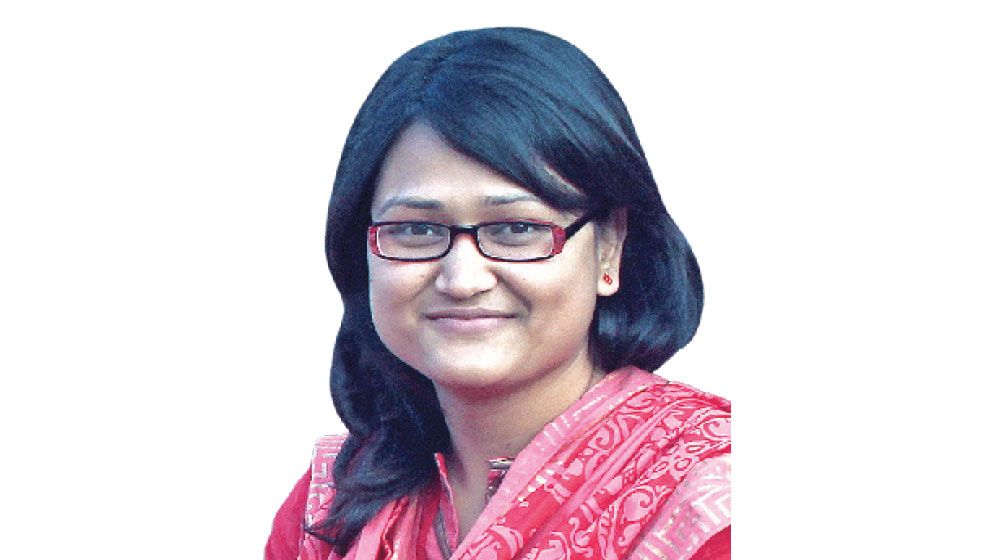
Kaniz Kakon [Published: Daily-sun, 24 January 2026]
Bangladesh’s 2026 election is less a single event than a national act of interpretation. Hermeneutics, meaning through context, begins with a simple truth: voters are not mere policy calculators. They read power through memory, rumour, faith, fear, aspiration, family obligation, price shocks and everyday dignity. UN Data lists Bangladesh’s 2024 population at 173,562,000 with a density above 1,333 per km², a concentration that turns politics into daily weather. In such density, identity spreads socially. One neighbour’s story becomes another’s caution. One arrest rumour can produce a lane of silence. One repaired bridge reads as care for some, patronage for others. The mass is a chorus of readings. Posters, rallies, police checkpoints, court verdicts, and tea-stall conversations function as political texts. Even nonparticipation speaks: withdrawal can signal disappointment, danger-sensing, refusal and exhaustion. Election identity forms by interpreting what the state allows, what citizenship permits, what risks exist, and what hopes remain credible. When political ground shifts, identity shifts. People reread themselves as citizens, subjects, survivors, participants, sceptics. Hermeneutics calls this shifting background a “horizon”, the frame that makes claims feel believable or absurd.
Digital life is one of the loudest interpretive institutions shaping that self. Official industry statistics citing BTRC place internet subscriptions at 129.89 million by the end of November 2025, including 115.27 million mobile users. Election meaning is no longer confined to speeches, newspapers, or local leaders. It circulates through short clips, forwarded screenshots, livestream sermons, comment wars, algorithmic feeds and sudden takedowns. Visibility has a new grammar: expression can generate status, employment risk, social conflict and surveillance anxiety. Identity becomes performative, shaped by audience awareness. A like can signal loyalty, curiosity and fear management. A share becomes a statement. Refusal becomes self-protection. Language adapts: euphemism rises when naming feels costly, humour shields when seriousness feels dangerous. Identity is not only a belief. It is what one can safely say, what one dares to say, what one must withhold. Digital density produces multiple interpretive communities: a garment worker in Gazipur reading through factory networks and labour pages, a university student reading through satire and memes, and a migrant-family household reading through remittance flows, currency rates and banking rules. Together, these readings form the mass, explaining why 2026 identity appears fragmented across different texts, risks and constraints. Across these fragments, shared priorities persist: security, dignity, stability, justice and voice.
Household economics supplies decisive footnotes in the voter’s inner narrative. Bangladesh Bureau of Statistics reported annual inflation at 8.49% in December 2025, up from 8.29% in November 2025, with both urban and rural indices rising. High inflation pushes the citizen towards pragmatism: values remain, yet life becomes a test of manageability. Can school fees be paid? Can medicine be bought? Can rent be met? Can a daughter commute safely? Can a son find work without humiliation? This pragmatism is survival intelligence under pressure. Remittances add another layer. A major Bangladeshi outlet, citing central bank data, reported record inflows of $32.8 billion in 2025, a historic high supporting external balance. Remittance signifies sacrifice, global inequality, family endurance, generating diverging readings: gratitude towards any order that keeps banking channels open, anger towards any order that makes migration necessary, distrust towards elites who speak of prosperity while exporting labour. In this setting, promises become texts judged by market evidence. “Control prices” is read through rice, oil and transport fares. “Create jobs” is read through hiring networks, bribery, expectations and nepotism. “Protect dignity” is read through encounters with local power.
Political legitimacy shapes identity by answering a core question: Does my voice count? A widely cited authentic figure is the official 41.8% turnout for the 7 January 2024 parliamentary election, reported by major international outlets while noting controversy and boycott context. Low turnout can be read as apathy, fear, boycott compliance, anger, logistical barriers or disbelief. Hermeneutics resists single-cause explanations. Staying home can be a moral statement. Voting can be a moral statement. Mass identity forms through encounters with institutions: police, courts, schools, land offices, hospitals, party offices, employers and local patrons. It often forms through remembered problem-solving: a relative rescued from a case, a road repaired, a job secured and a dispute settled fairly. These memories create shortcuts: “This side protects,” “That side punishes,” “Nobody cares,” “Only local leaders matter,” “Voting changes nothing,” “Voting is a duty.” In 2026, these shortcuts compete with Reuters’ national narrative: a new interim order, a barred former ruling party, a referendum alongside an election, plus a reform charter called the “July Charter,” intensifying struggles over citizenship, reform credibility, institutional trust, and rivalry without existential threat.
A hermeneutics of identity for 2026 ends with a Bangladeshi paradox: people are tired, yet watchful. High inflation in late 2025, record remittances in 2025, massive digital connectivity by late 2025, plus a transitional scene moving towards a February timetable, produce a citizen who reads everything twice. The first reading is emotional: fear of instability, hunger for dignity, anger at humiliation, desire for calm. The second is strategic: what is safe to say, what is safe to do, what risks exist for my family, what future is plausible. Identity becomes layered: moral claims for justice, protective instincts for safety, weariness seeking liveability, and hope for a fairer order. The 2026 election becomes a national mirror of how Bangladeshis interpret their place in a changing polity: participant, witness, silent resistor, pragmatic survivor. The deeper question is whether institutions will honour that interpretive agency. Treat people as statistics, and they answer with withdrawal. Treat people as meaning-makers; they answer with participation. Bangladesh’s 2026 vote will be read far beyond ballot boxes because it helps decide what kind of society it permits its mass people to become.
The writer is an Assistant Professor in the Department of Philosophy at IUBAT and is currently on study leave, residing in Oslo, Norway