It is time to legally recognise climate refugees
Musfiq Rahman Ridoy [Source: The daily star, Dec 8, 2025]
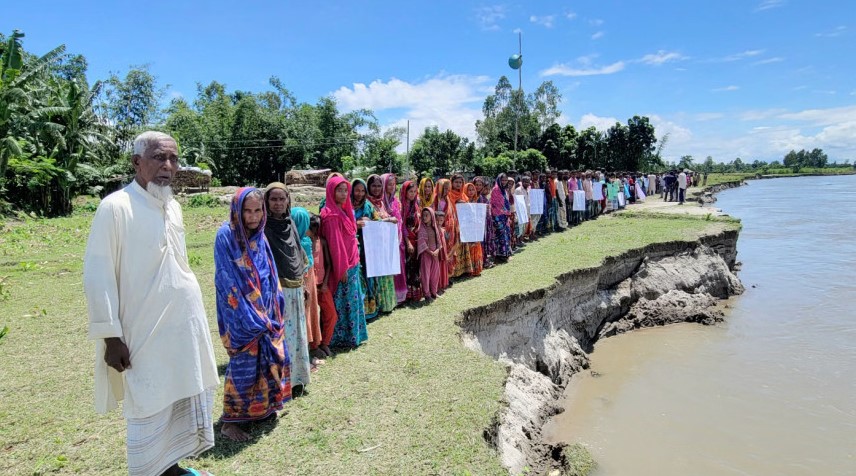
Every year in Bangladesh, many people are being displaced as rising seas, shifting rivers, and extreme weather conditions steadily consume the land beneath their feet. With every flood, cyclone and erosion event, thousands of people lose both their shelter and legal identity tied to their land, which turns them into refugees in their own country—a new class of citizens who are displaced not by conflict but by climate.
Though river erosion is one of the most visible causes of climate displacement, it is only a part of a larger nationwide emergency. According to a United Nations Framework Convention on Climate Change (UNFCCC) report, approximately sixty lakh people in Bangladesh have already been displaced by climate-related hazards, including cyclones, storm surges, coastal flooding and salinity intrusion. From the draught-prone fields of Rajshahi, Naogaon to the salinity-hit coasts of Khulna, Satkhira, along with the cyclone-devastated shores of Barguna and Bagerhat, the impacts of climate change are uprooting families across the country.
Rising sea levels have turned fertile lands into saline wastelands due to global warming. Cyclones and floods regularly jeopardise habitats, while droughts decimate productivity in agricultural lands. Climate-driven migrants in Bangladesh come from all kinds of landscapes. Their backgrounds may vary, but they share one reality—Bangladesh's legal framework still lacks formal rights and protective mechanisms for them.
The Constitution of Bangladesh guarantees equal protection under law and the right to life, livelihood, and property for every citizen. But these guarantees lose their true meaning when climate disasters obliterate the only land a person owns.
Existing land laws, especially the State Acquisition and Tenancy Act, 1950, and the Land Management Manual, 1990, were designed for a stable geography. But these particular laws do not account for land that disappears permanently due to climate change. As a result, millions of displaced families have no formal right to rehabilitation, reallocation, or recognition, having their records valid on paper but meaningless in reality.
Some people may argue that Bangladesh's existing land laws already address river-based land loss through the doctrines of alluvion and diluvium (natural processes where rivers gradually add or wash away land). However, these statutes are only applied when land reappears and can be reallocated to the original owner. They were crafted for slow and reversible changes but not for permanent, large-scale losses caused by climate change.
The rules offer no legal solution when land sinks under the sea or becomes uninhabitable. The law focuses on the movement of rivers but not on the movement of people.
According to the International Organization for Migration (IOM), the number of Bangladeshi people already displaced could reach 1.3 crores by 2050. Yet, none of them are recognised in any national law or international treaty. Bangladesh's Climate Change Strategy and Action Plan ( BCCSAP) 2009 acknowledges the problem, but it remains only a policy document, not a binding legal instrument.
Bangladesh can be a leading example by creating a climate displacement law or amending existing land legislation for the betterment of the climate-displaced people. Legal scholars and experts suggest several reforms to strengthen Bangladesh's response to climate-driven displacement, including (i) legal recognition of climate refugees in national law, ensuring that they will not be treated as invisible victims of climate change; (ii) creation of a national climate rehabilitation board under the Ministry of Land to oversee identification, relocation and long-term rehabilitation of affected populations; (iii) rightful and fair allocation of khas-lands for resettlement so that displaced families receive secure tenure and a sustainable livelihood; (iv) providing gender responsive property protection, particularly for widowed, abandoned or landless women, who face severe vulnerability during displacement; and (v) creation of a climate justice fund for providing financial support to the displaced people.
The promise of constitutional rights fades when the ground beneath citizens' feet quietly disappears. Ensuring recognition, rehabilitation, and effective land rights for the climate-displaced people is not just a policy reform but a constitutional and moral obligation. By adopting proper measures, Bangladesh can stand as a global voice for climate justice.
Musfiq Rahman Ridoy is a student of law at Bangladesh University of Professionals.